[vc_row full_width=“stretch_row“ css=“.vc_custom_1495552946740{margin-top: 0px !important;background-image: url(http://www.hullak-architekten.de/wp-content/uploads/2017/05/header-3.jpg?id=1119) !important;background-position: center !important;background-repeat: no-repeat !important;background-size: cover !important;}“][vc_column][vc_column_text]

3 Dimensional

Hullak Architekten

[/vc_column_text][/vc_column][/vc_row][vc_row full_width=“stretch_row_content“][vc_column width=“1/3″][/vc_column][vc_column width=“1/3″][vc_column_text]

Zurück
zur
Übersicht

[/vc_column_text][/vc_column][vc_column width=“1/3″][/vc_column][/vc_row][vc_row full_width=“stretch_row_content“ css=“.vc_custom_1491997741983{margin-bottom: 0px !important;padding-bottom: 0px !important;}“][vc_column css=“.vc_custom_1482314272986{margin-bottom: 0px !important;padding-bottom: 0px !important;}“][vc_row_inner css=“.vc_custom_1482314240101{margin-top: 0px !important;margin-bottom: 0px !important;padding-top: 0px !important;padding-right: 75px !important;padding-bottom: 0px !important;padding-left: 75px !important;}“ el_class=“angle“][vc_column_inner width=“1/3″ css=“.vc_custom_1482314247424{margin-bottom: 0px !important;padding-bottom: 0px !important;}“][/vc_column_inner][vc_column_inner width=“1/3″ css=“.vc_custom_1491999843547{margin-bottom: 0px !important;padding-bottom: 0px !important;}“][vc_single_image image=“1004″ img_size=“73×35″ alignment=“center“ css=“.vc_custom_1491999992959{margin-bottom: 0px !important;padding-bottom: 0px !important;}“ el_class=“dreieck-up“][/vc_column_inner][vc_column_inner width=“1/3″ css=“.vc_custom_1482314265313{margin-bottom: 0px !important;padding-bottom: 0px !important;}“][/vc_column_inner][/vc_row_inner][vc_row_inner css=“.vc_custom_1491999818450{margin-top: 0px !important;margin-bottom: 0px !important;padding-top: 30px !important;padding-right: 75px !important;padding-bottom: 0px !important;padding-left: 75px !important;background-color: #f5f3f3 !important;}“][vc_column_inner css=“.vc_custom_1482314283864{margin-top: 0px !important;padding-top: 0px !important;}“][vc_column_text css=“.vc_custom_1580814055810{margin-top: 0px !important;padding-top: 0px !important;}“]

WBW KLOSTER UNTERMARCHTAL · Hullak Rannow Architekten
[/vc_column_text][/vc_column_inner][/vc_row_inner][/vc_column][/vc_row][vc_row full_width=“stretch_row_content“ el_class=“projektdetail“ css=“.vc_custom_1491998062686{margin-top: 0px !important;margin-bottom: 0px !important;padding-top: 0px !important;padding-bottom: 0px !important;background-color: #f5f3f3 !important;}“][vc_column css=“.vc_custom_1482232232621{margin-top: 0px !important;padding-top: 0px !important;}“][vc_row_inner content_placement=“middle“ css=“.vc_custom_1491998072080{margin-top: 0px !important;margin-bottom: 0px !important;padding-top: 0px !important;padding-right: 75px !important;padding-bottom: 0px !important;padding-left: 75px !important;background-color: #f5f3f3 !important;}“][vc_column_inner][vc_images_carousel images=“1708,1709,1710,1711″ img_size=“full“ onclick=“link_no“ speed=“3000″ autoplay=“yes“ wrap=“yes“][/vc_column_inner][/vc_row_inner][vc_column_text css=“.vc_custom_1582101721708{margin-top: 0px !important;margin-right: 0px !important;margin-bottom: 0px !important;margin-left: 0px !important;padding-top: 0px !important;padding-right: 75px !important;padding-bottom: 75px !important;padding-left: 75px !important;background-color: #f5f3f3 !important;}“]Planungsgutachten „Mutterhaus St. Maria – St. Notburga“: 2. Platz
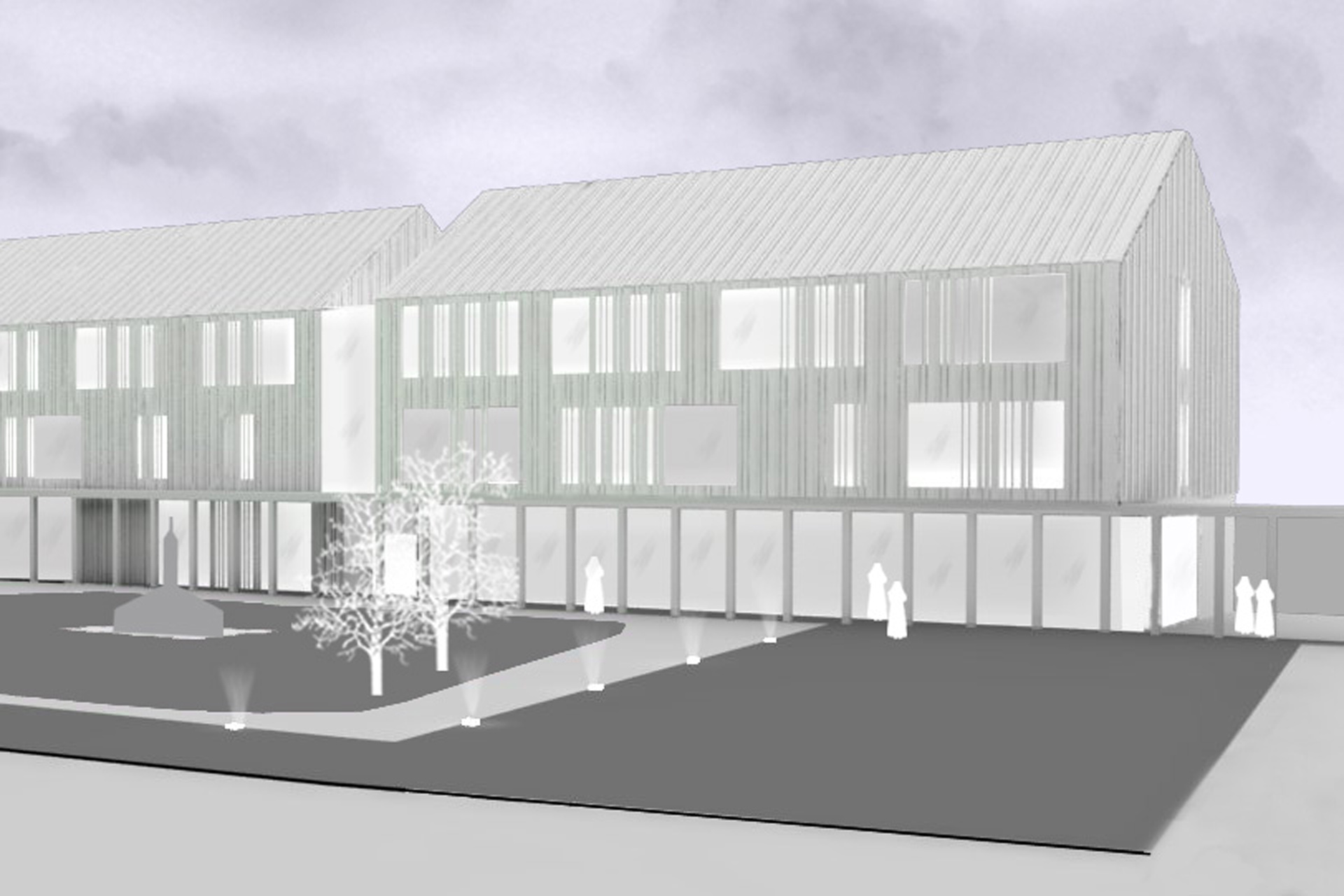
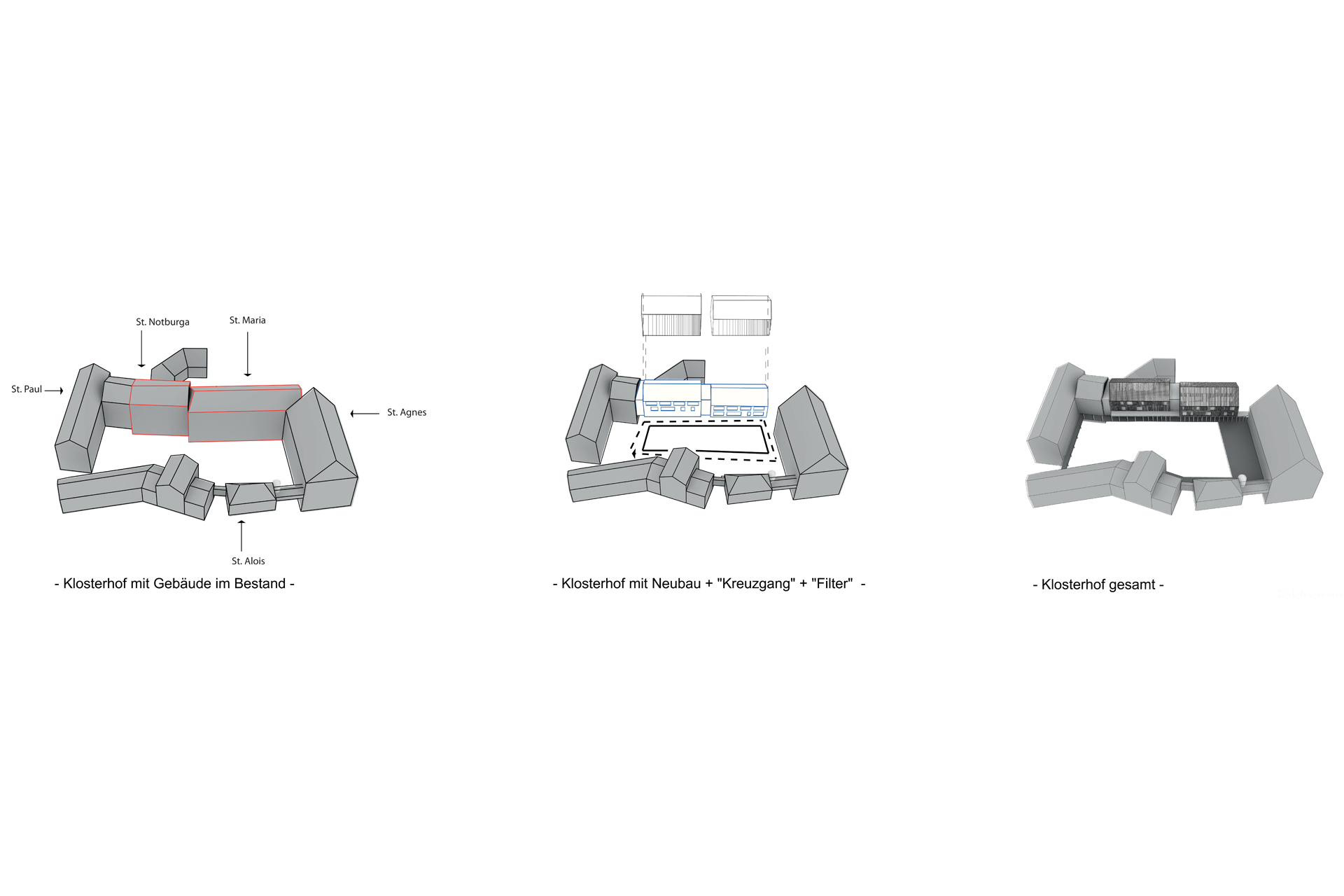
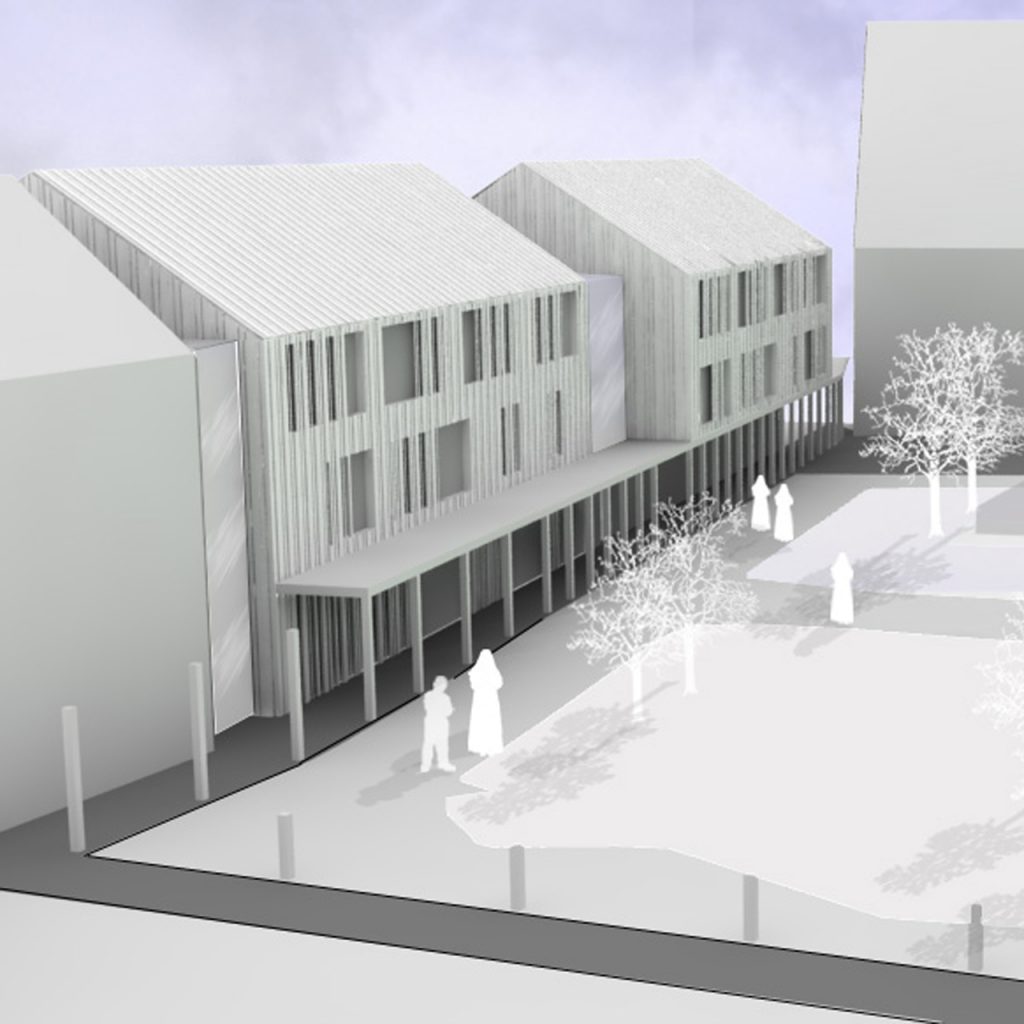
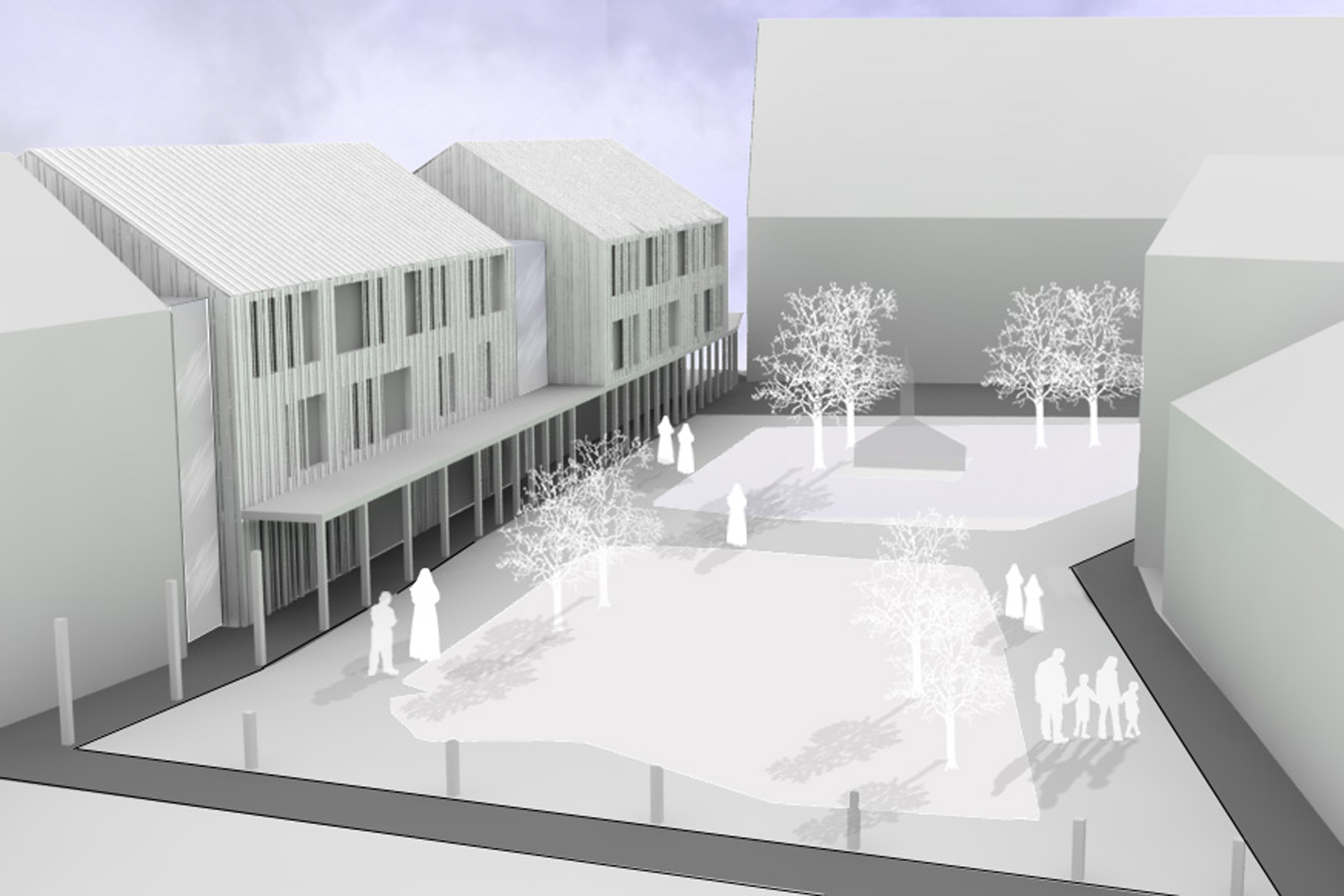
Entwurfsaufgabe war die Schaffung eines Wohnhauses der Schwestern am Standort Kloster Untermarchtal. Dafür galt es abzuwägen, die bestehenden Häuser St. Notburga und St. Maria zu sanieren, teil,- oder komplett abzubrechen. Die Entscheidung fiel auf einen Neubau. Im Kostenansatz sind Neubau und Sanierung zwar ähnlich. Allerdings kann bei einem Neubau die Flächennutzung optimiert und um etwa 40 % reduziert werden. Der geringere Raumbedarf ermöglicht einen Neubau, der sich vom Schloss löst und die wünschenswerte kleingliedrige Struktur wieder herstellt. Die dörfliche Innenhofstruktur des Klosters wird mit zwei freistehenden Baukörpern ergänzt, die sich in ihrer Höhe und Tiefe an den Bestand anpassen. Beide Hauskörper sind über gläserne Fugen mit den jeweiligen Nachbargebäuden verbunden, die räumlich das Gefüge schließen. Sowohl vom Hof her gesehen, als auch von der Donauseite, werden beide Gebäude 3-geschossig wahrgenommen. Die Neubauten sind klar ablesbar. Die bestehenden beiden Untergeschosse bilden den „historischen“ Sockel. Das neue Gebäude soll das „Wohnhaus“ der Schwestern sein. Mit Feingefühl ist hier auf der einen Seite die öffentliche Zugänglichkeit des Klosterhofes und auf der anderen Seite das Privatleben der Schwestern zu vereinen. Baulich soll dies mit einem vorgeschalteten Wandelgang auf der Innenhofseite umgesetzt werden, der an den historischen, in Klosteranlagen üblichen Kreuzgang erinnert. Er verbindet aber auch den Bestand mit den Neubauten, indem er im übrigen Klosterhof umlaufend als Pflasterbelag fortgeführt wird. Bewusst werden die beiden neuen Häuser von Schloss St. Agnes losgelöst, um die Rolle des Mutterhauses hervorzuheben.
Fotos: © Hullak Rannow Architekten[/vc_column_text][/vc_column][/vc_row][vc_row css=“.vc_custom_1491988794168{margin-top: 30px !important;border-top-width: 10px !important;border-top-color: #0a0a0a !important;border-top-style: solid !important;}“][vc_column][/vc_column][/vc_row]